
July 2026

Patient Empowerment Workgroup Member
HCPLAN members play a vital role in advancing healthier communities and stronger healthcare connections. In July 2026, Libby Hoy, a member of the Patient Empowerment Workgroup, shared insights on how PFCCpartners helps health care organizations partner with patients, families, and caregivers and why it matters for care design, quality improvement, and payment innovation.
How is PFCCpartners advancing value-based care?

“PFCCpartners advances value-based care by helping health care organizations understand and act on what creates real value for patients, families, and communities. PFCCpartners builds impactful engagement infrastructure needed to surface lived experience, identify avoidable burden and administrative friction, strengthen care coordination, improve communication, and ensure that quality improvement and payment innovation are grounded in what matters most to people receiving care. Our work helps move patient and family engagement beyond compliance toward meaningful partnership in the design, implementation, and evaluation of value-based care. Real value is lived before it is measured.”
What measurable outcomes have resulted from this approach?
“PFCCpartners has demonstrated that patient and family partnership can contribute to measurable improvement in value-based care. Through EQUIP-LA, a county-wide initiative led in partnership with the California Quality Collaborative from 2023–2025, PFCCpartners supported health plans, ACO managers/improvement coaches, and clinic teams in embedding patient and family engagement into quality improvement efforts. The initiative exceeded its original 20% improvement aim, resulting in improvements of up to 34% across three domains — hypertension, colorectal screening, and diabetes management. Structured patient and family engagement can move beyond consultation to become a practical driver of quality and value-based care.”
How does this work align with the HCPLAN’s Patient Empowerment priorities?
“The Patient Empowerment Workgroup has created strong guidance for organizations desiring to empower patients. The workgroup has consistently called out the need to design incentive programs around the health and care activities that are important to the person first and then to the health system. We build the conditions for patients and families to shape the systems, incentives, measures, and improvement priorities that affect them.
PFCCpartners creates structured pathways for patients, families, and caregivers to identify barriers to care, clarify what information people need to make informed choices, and shape improvement strategies that reduce burden and make care more understandable, coordinated, and responsive. Through initiatives such as EQUIP-LA and our broader PFAnetwork engagement infrastructure, we help ensure that patient empowerment is not limited to individual activation, but extends to governance, quality improvement, measurement, and payment reform — so that value-based care is designed around what people need to access care, navigate care, trust care, and achieve better outcomes.”
In one sentence, what is your organization’s “why” for value-based care?
“Our “why” is to bring health care back to its most basic purpose: helping people get the right care, at the right time, in ways they can understand, afford, trust, and use to improve their lives.”
What aspect of your current work with the HCPLAN are you most excited about, and why?
“The Patient Empowerment Workgroup has been a great opportunity to learn with professionals who also recognize the value of engaging patients in care design and implementation. Several members of the workgroup have shared examples of plans that have invested in expanding the ways in which they serve the health and social needs of their members. While return on investment may be difficult to show in dollars, it can be most often expressed in efficiencies and burden reduction for patients, health plans, and providers.”
Learn more about the HCPLAN’s Patient Empowerment work.

 Providers |
  Policy Makers |
  Purchasers |
  Enabling Organizations |
  Community-Based Organizations







 Providers |

















 Emily DuHamel Brower, M.B.A., is senior vice president of clinical integration and physician services for Trinity Health. Emphasizing clinical integration and payment model transformation, Ms. Brower provides strategic direction related to the evolving accountable healthcare environment with strong results. Her team is currently accountable for $10.4B of medical expense for 1.6M lives in Medicare Accountable Care Organizations (ACOs), Medicare Advantage, and Medicaid and Commercial Alternative Payment Models.
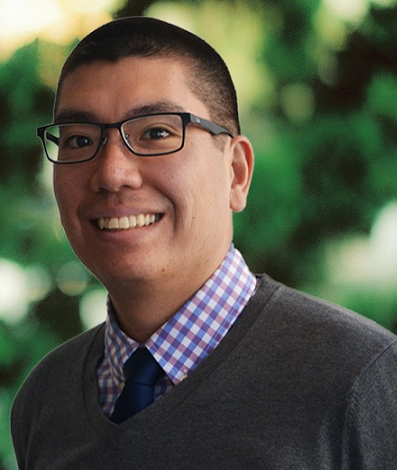 Victor is the Chief Medical Officer for TennCare, Tennessee’s Medicaid Agency. At TennCare, Victor leads the medical office to ensure quality and effective delivery of medical, pharmacy, and dental services to its members. He also leads TennCare’s opioid epidemic strategy, social determinants of health, and practice transformation initiatives across the agency. Prior to joining TennCare, Victor worked at Evolent Health supporting value-based population health care delivery. In 2013, Victor served as a White House Fellow to the Secretary of Health and Human Services. Victor completed his Internal Medicine Residency at Emory University still practices clinically as an internist in the Veteran’s Affairs Health System.
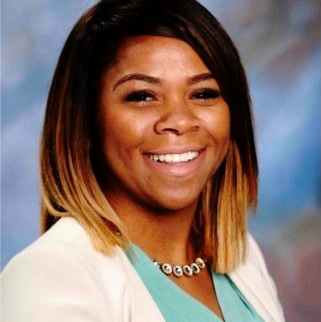 Tamara Ward is the SVP of Insurance Business Operations at Oscar Health, where she leads the National Network Contracting Strategy and Market Expansion & Readiness. Prior to Oscar she served as VP of Managed Care & Network Operations at TriHealth in Southwest Ohio. With over 15 years of progressive health care experience, she has been instrumental driving collaborative payer provider strategies, improving insurance operations, and building high value networks through her various roles with UHC and other large provider health systems. Her breadth and depth of experience and interest-based approach has allowed her to have success solving some of the most complex issues our industry faces today. Tam is passionate about driving change for marginalized communities, developing Oscar’s Culturally Competent Care Program- reducing healthcare disparities and improving access for the underserved population. Tamara holds a B.A. from the University of Cincinnati’s and M.B.A from Miami University.
 Dr. Peter Walsh joined the Colorado Department of Health Care Policy and Financing as the Chief Medical Officer on December 1, 2020. Prior to joining HCPF, Dr. Walsh served as a Hospital Field Representative/Surveyor at the Joint Commission, headquartered in Oakbrook Terrace, Illinois.