Purpose
When individuals take an active role in their health, they are more likely to make informed decisions, follow through on care, and maintain healthy behaviors over time, ultimately leading to better care and better results.¹˒ ² Yet many organizations lack clear, actionable guidance on how to design, implement, and scale patient empowerment strategies, slowing progress towards value-based care.
Patient empowerment rests on three interconnected principles: making care affordable, ensuring patients can access the services they need, and helping them navigate the health care system with confidence. Designed for a broad set of stakeholders — providers (including accountable care organizations (ACOs)), health plans, employers, and community-based organizations (CBOs) — this Guidebook highlights leading practices aligned to each pillar. These include redesigning financial incentives to improve affordability, expanding access to wellness activities, and delivering personalized reminders/nudges to strengthen navigation.
Defining Patient Empowerment
Patient empowerment goes beyond patient engagement, where the health system prompts patients to act. It enables patients to be primary drivers of their care with the right information, tools, and support.
Empowering Patients at Each Step in the Care Journey
Patients often face challenges throughout their care journey and may need support finding resources, understanding complex medical information, and/or navigating the care process.
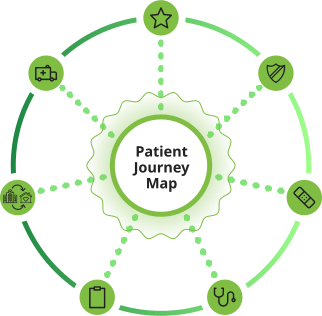
The patient journey map* below reflects an ideal experience in which empowered patients have the information, support, confidence, and connections they need to make decisions, act, and stay engaged in ways that fit their goals, preferences, and daily lives.
Patient empowerment should not rely on a one-size-fits-all model. Patients may lead, share, or delegate decisions, including whether or not to follow recommendations, depending on their goals, readiness, health literacy, language, digital access, and support from trusted care partners. Empowerment can also occur through multiple channels, including text, apps, portals, or in-person support.
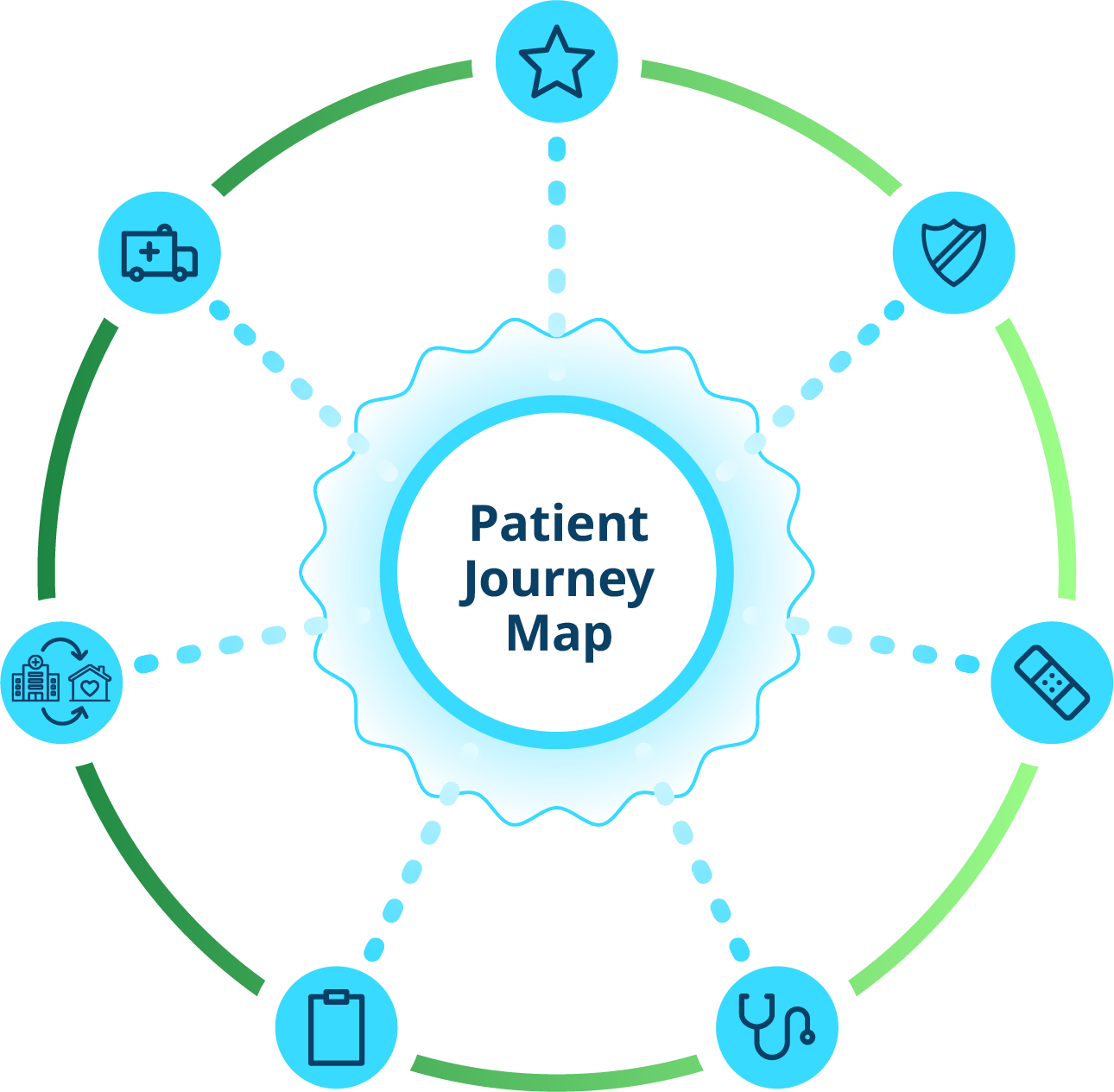
 Wellness
The patient has support to build and maintain healthy habits, understand basic health information, and establish connections with primary care and community resources to stay well. The patient feels confident managing their day-to-day health and knows where to turn when questions or concerns arise.
 Prevention
The patient understands how to lower health risks, stay up to date on preventive care, and take action on new concerns early. The patient is prepared and participates in screenings, monitoring, and other preventive steps that help maintain health or identify issues before they worsen.
 Onset and Early Symptoms
The patient recognizes when something may be wrong, feels comfortable seeking help early, understands what to do next, and plans for the future. The patient can act on early signs — whether symptoms appear suddenly or gradually — before issues escalate.
 Diagnosis and Treatment Initiation
The patient understands the diagnosis, treatment options, likely trade-offs, and immediate next steps. The patient also feels prepared to ask questions, express preferences, participate in decisions, and begin treatment with clarity and confidence.
 Ongoing Management
The patient has the personalized care plan needed to stay engaged in managing a chronic condition over time, including through tertiary prevention strategies such as medication adherence support and rehabilitation that help maintain function and slow disease progression.
 Transition of Care
The patient experiences smooth transitions between care settings and understands what is changing, what to do next, and who to contact for help. This process feels coordinated rather than fragmented or repetitive.
 Acute Episodes
In urgent situations, the patient knows what to do, where to go, and how to get help quickly. Even in stressful moments, the patient can take the next steps with confidence because guidance is clear and support is accessible.
* Please note that these steps may not occur in chronological order and not all patients may experience all of these phases.
Foundational Actions to Advance Patient Empowerment
The foundational actions below describe the fundamental structures needed to support patient empowerment across the health care ecosystem. Regardless of which strategies organizations use, these actions engage and reach patients, equip them to act, and integrate systems to reduce burden and improve follow-through.

Key Stakeholder Roles in Advancing Patient Empowerment
Patient empowerment is a shared responsibility across the health care ecosystem. While each stakeholder contributes in different ways, meaningful progress depends on coordinated efforts that can make care more affordable, accessible, and easier to navigate. The stakeholders below play distinct but complementary roles in helping patients become active participants in their health and well-being.
While their roles differ, these stakeholders are most effective when they work together to reduce burden, align support, and create a more coordinated experience that enables patients to take an active role in their health and well-being.






Levers to Support and Advance Patient Empowerment
Building on the foundational actions above, the three levers below outline specific strategies that can help stakeholders reduce barriers to care and advance patient empowerment strategies.
Lever One: Redesigning Financial Incentives
LEVER DESCRIPTION: Financial incentives — such as premium discounts, health savings account contributions, or branded debit cards — can make care more affordable by reducing out-of-pocket costs and increasing patients’ trust and readiness to engage with sponsors of the incentives. While evidence regarding the return on investment for these incentives is emerging, there are leading practices that organizations implementing these types of interventions can use to streamline and improve their effectiveness.³

Example Actions to Redesigning Financial Incentives
The actions below are based on what patients value: clear, easy-to-understand information, practical options that fit into everyday life, flexible rewards they can choose how to use, simple sign-up and redemption steps, and step-by-step navigation support so care feels manageable, not overwhelming.
The stakeholder icons indicate who may lead or support each action. See the Key Stakeholder Roles in Advancing Patient Empowerment section for additional context.
Simplify and Streamline Incentive Delivery and Participation
- Automatically enroll and notify eligible members into incentive programs and deliver rewards seamlessly (e.g., automatically loaded onto member cards)

- Provide rewards immediately after a patient completes a screening and clearly prompt via visual cues like QR-enabled steps (e.g., at medication pickup) to build momentum beyond the first action

Tailor and Personalize Incentives
- Offer a limited menu of incentive options based on individual needs (e.g., grocery cards, subsidized gym memberships) and patient data (e.g., age, health status, preferences) so patients choose what works for them without feeling overwhelmed
- Use step-by-step or ongoing rewards through employer wellness programs (e.g., small rewards for incremental progress and a larger reward for completion in a step challenge)
Integrate Education and Support
- Pair each incentive with a brief, personalized tip sheet/educational handout and enable a “warm hand-off” to local supports that address the patient’s barriers

- Send coordinated, context-aware digital reminders with clear next steps and provide tracking so patients can view progress (e.g., milestones achieved, rewards, educational tips)

Bright Spots
Explore how Health Care LA and UPenn successfully used financial incentives

Change Management Tips
Explore practical, actionable ways to support organizations

Patient Profile
Explore how George can take control of his Type II diabetes and build sustainable habits
Lever Two: Increasing Access to Wellness Activities
LEVER DESCRIPTION: Increasing patients’ access to wellness activities and building pathways to drive behavior change can help remove practical barriers (e.g., time, cost, inconvenience).⁶ Over time, this may help many patients build and sustain healthy lifestyles (e.g., physical activity, healthy eating, and social engagement) and strengthen their self-management and confidence to take an active role in their health.⁷

Example Actions to Increase Access to Wellness Activities
The actions below are based on what patients value: options that fit real life (e.g., easy to start, pause, or rejoin as life changes), support from trusted people, and coordinated “one-stop” services aligned with their regular health care touchpoints.
The stakeholder icons indicate who may lead or support each action. See the Key Stakeholder Roles in Advancing Patient Empowerment section for additional context.
Offer Flexible, Person-Centered Participation Options
- Co-design programs with patients and offer flexible sign-up options that fit changing life circumstances and make it easy to pause and rejoin
- Where feasible, adopt flexible approaches that let people use their preferred activities or devices

- Provide short-term challenges and flexible wellness activities while allowing employees to join based on their changing availability and interest
Leverage Existing Technology and Long-Standing Relationships
- Put community health workers (CHWs) and peer support at the center of outreach, problem-solving, and follow-through to build trust and long-term relationships in the community
- Add digital tools (e.g., apps, texting, chat, artificial intelligence (AI)) into existing care workflows to reinforce and tailor wellness messaging as needed, while recognizing they work best when paired with trusted, local relationships
- Provide digital literacy support and alternative access options to ensure patients who are less familiar with technology or who need additional guidance can still benefit from digital tools
Bundle Support Services and Build Sustained Engagement
- Work with Community Care Hubs to organize and coordinate bundled services (e.g., medical, nutrition, fitness, mental health) with regular, layered touchpoints (e.g., home visits, peer groups, virtual care) to keep people engaged and support outcomes
- Align benefits and programs by waiving copays for members who participate in bundled wellness initiatives to simplify their experience and reduce drop-off at common friction points

Bright Spots
Explore how Valley Organized Physicians and Blue Shield of California successfully increased access to wellness activities

Change Management Tips
Explore practical, actionable ways to support organizations

Patient Profile
Explore how Tammy can take control of her blood pressure and build sustainable habits
Lever Three: Delivering Personalized Reminders/Nudges
LEVER DESCRIPTION: Personalized reminders/nudges, when delivered thoughtfully, give people helpful prompts at the right time and support patient navigation. Personalized reminders prompt a specific, single next step, while nudges go a step farther by making that specific action easier or more likely (e.g., gamification).10,11 Technology and AI can help make this level of personalization more feasible at scale, but these tools are most effective when paired with clear next steps and human support when patients need help.

Example Actions to Deliver Personalized Reminders/Nudges
The actions below are based on what patients value: a personalized experience, pairing digital outreach with human support, and coordinated, short, and timely reminders to avoid alert fatigue and message overload.
The stakeholder icons indicate who may lead or support each action. See the Key Stakeholder Roles in Advancing Patient Empowerment section for additional context.
Combine Technology-Driven Personalization with Human Support
- Personalize beyond names by using messaging that fits the person’s situation, lived experience, and/or preferences (e.g., newly diagnosed vs. chronic condition). Set small goals and tailor tone, timing, modality, and content to match readiness levels
- Connect reminders/nudges with human support (e.g., peer, care team, navigator support) when needed — especially if patients ask for help or stop responding
Engage Stakeholders in Co-Designing Programs and Messaging
- Co-design outreach with input from local providers, community organizations, and patients/family members; align messaging to fit local preferences and cultural norms
- Coordinate communications across organizations by using consistent wording, and when possible, one shared platform or single channel, keep reminders short and send them at key moments when people are making decisions
Integrate Bi-Directional Engagement and Feedback
- Use adaptive, two-way tools and technology that let patients reply to confirm they completed a step, ask for help, or pause reminders. Confirmation is best for one-off behaviors (e.g., mammograms), while follow-ups are more useful for ongoing behaviors (e.g., medication adherence)
- Pair digital reminders and nudges with enabling mechanisms (e.g., self-scheduling links, direct referrals, two-way response options) so outreach makes follow-through easier in the moment

Bright Spots
Explore how Hoag Clinic and Ascension successfully increased access to wellness activities

Change Management Tips
Explore practical, actionable ways to support organizations

Patient Profile
Explore how Robert can take control of his chronic musculoskeletal pain and build sustainable habits
Scaling Patient Empowerment: CMS Innovation Models Support and Encourage Patient Empowerment

Addressing Policy and Regulatory Barriers
Policy and regulatory barriers can make it harder for patients to access information, navigate care, and stay engaged. They can also limit other stakeholders’ (e.g., providers, payers, etc.) ability to have the data and flexibility needed to achieve patient empowerment. While many of the challenges listed below require system-level action, the strategies in the Guidebook can help organizations take practical steps now to empower patients.
Addressing Policy and Regulatory Barriers

Potential Future State

Since clinical, health plan, pharmacy, and community data often sit in separate systems, patients and other stakeholders involved often struggle to access the data they need. This creates repeat outreach, broken handoffs across settings, a fragmented experience for patients and their caregivers, and often worse health outcomes. As AI becomes more common in health care, unequal access to information risks patients being left out of important decisions or unable to benefit from tools that can help them manage their care.
Interoperable, privacy-protected data sharing that supports a whole-person view across settings. For patients, this means a more coordinated experience, better health outcomes, and access to their health information, beyond their patient portals, in formats that are usable and understandable.
HIPAA-driven consent and data-sharing permissions are often long, technical, and require multiple steps, which creates friction, reduces opt-in rates, and makes it difficult to personalize support and build trust.
Consent is redesigned into a simple, plain language process that clearly explains what is shared, how it benefits the patient, and how data is protected with options that reflect different technology savviness as well as health literacy levels and preferences.
CBOs play a critical role in helping address non-clinical barriers to patient empowerment. However, many face significant challenges (e.g., complex enrollment/registration requirements, credentialing) and lack the medical-billing infrastructure, specialized staff, or administrative capacity needed to manage these demands. Fragmented contracting and payment approaches often fail to cover the true cost of services, limiting participation and reducing access for patients.
CBOs have clearer reimbursable pathways, rightsized oversight, and simpler contracting and payment models that better reflect how services are delivered. This makes it easier to participate, sustains high-touch support, and frees providers to focus on clinical care. In some markets, umbrella hub organizations may help smaller CBOs manage billing and administrative functions; however, there is limited adoption to date.
Organizations often take time to translate new policy and program rules into their daily workflows. Many wait for proven use cases or “clear permission,” which can slow the uptake of improvements that could benefit patients.
Policy changes are paired with clear implementation guidance, operational resources, and early-adopter examples so organizations can adopt changes faster and patient-facing improvements show up sooner in care.
Getting Started: Quick Tips & What to Do in the Next 30/60/90 Days
Key Contributors
The HCPLAN Operator Team wishes to thank members of the Patient Empowerment Workgroup for sharing their insights to help inform the development of the Patient Empowerment Guidebook.
- Amy Bucher, PhD, Lirio
- William Bleser, PhD, MSPH, Administration for Community Living
- Carol Challas, Patient Representative
- Susan Cook, Patient Representative
- Chris Craytor, Welld Health
- Karen Dale (Workgroup Co-Chair), AmeriHealth Caritas District of Columbia
- Natalie Davis, US of Care
- Kit Delgado, MD, MS, University of Pennsylvania
- Susan Dentzer, America’s Physician Groups
- Merrill Friedman, Elevance Health
- Rivka Friedman, Morgan Health
- Nzinga Harrison, MD, Eleanor Health
- Libby Hoy, PFCCpartners
- Josh Liao, MD, MSc, Ascension
- Rebecca Oran, BCBS MA
- Gerald Parker, Patient Representative
- Nick Reddy, Baylor, Scott & White Health
- Scott Rotermund, Sunny Benefits
- Tamara Thomas, Aledade
- Gloria Winters, DPT, YMCA
- Judy Zerzan-Thul, MD, MPH (Workgroup Co-Chair), Washington State Health Care Authority

 Policy Makers |
  Purchasers |
  Enabling Organizations |

 Providers |















 Emily DuHamel Brower, M.B.A., is senior vice president of clinical integration and physician services for Trinity Health. Emphasizing clinical integration and payment model transformation, Ms. Brower provides strategic direction related to the evolving accountable healthcare environment with strong results. Her team is currently accountable for $10.4B of medical expense for 1.6M lives in Medicare Accountable Care Organizations (ACOs), Medicare Advantage, and Medicaid and Commercial Alternative Payment Models.
 Victor is the Chief Medical Officer for TennCare, Tennessee’s Medicaid Agency. At TennCare, Victor leads the medical office to ensure quality and effective delivery of medical, pharmacy, and dental services to its members. He also leads TennCare’s opioid epidemic strategy, social determinants of health, and practice transformation initiatives across the agency. Prior to joining TennCare, Victor worked at Evolent Health supporting value-based population health care delivery. In 2013, Victor served as a White House Fellow to the Secretary of Health and Human Services. Victor completed his Internal Medicine Residency at Emory University still practices clinically as an internist in the Veteran’s Affairs Health System.
 Tamara Ward is the SVP of Insurance Business Operations at Oscar Health, where she leads the National Network Contracting Strategy and Market Expansion & Readiness. Prior to Oscar she served as VP of Managed Care & Network Operations at TriHealth in Southwest Ohio. With over 15 years of progressive health care experience, she has been instrumental driving collaborative payer provider strategies, improving insurance operations, and building high value networks through her various roles with UHC and other large provider health systems. Her breadth and depth of experience and interest-based approach has allowed her to have success solving some of the most complex issues our industry faces today. Tam is passionate about driving change for marginalized communities, developing Oscar’s Culturally Competent Care Program- reducing healthcare disparities and improving access for the underserved population. Tamara holds a B.A. from the University of Cincinnati’s and M.B.A from Miami University.
 Dr. Peter Walsh joined the Colorado Department of Health Care Policy and Financing as the Chief Medical Officer on December 1, 2020. Prior to joining HCPF, Dr. Walsh served as a Hospital Field Representative/Surveyor at the Joint Commission, headquartered in Oakbrook Terrace, Illinois.