News

Explore our collection of featured HCPLAN Articles, Press Releases, and External News.


Why should employers care about health care payment reform? In this blog, Senior Vice President for Global Benefits at Wal-mart Stores, Inc and member of the Guiding Committee for the LAN, Sally Welborn, highlights the role of employers in realigning our country’s health care payment paradigm. READ MORE
By: Health Care Payment Learning & Action Network

By: Health Care Payment Learning & Action Network

At our kick-off meeting, the CEP Work Group came to a consensus decision to explore episode payments in three priority areas: joint replacement, maternity care, and cardiac care. READ MORE
By: Health Care Payment Learning & Action Network

By: Health Care Payment Learning & Action Network

Why should employers care about health care payment reform? Because of a concern over the continuing rise in health care costs.

It’s really quite simple. Company business models cannot sustain increases in general and administrative expenses (which is where most employers pay for employee benefits) that exceed increases in other income streams. So how can we stop this ever increasing spiral of health care costs that are impacting both companies and their employees?

Realigning the Payment System

In my opinion, the primary strategy employers must embrace is to work at realigning the payment system. The current fee-for-service payment system primarily incentivizes more care, rather than appropriate care based on quality and safety. Fixing the payment system can actually result in limiting the cost increases AND drive quality improvements. This isn’t a novel idea. Employers have been talking about this for the last 10 years. Why does it seem so hard to fix this? And why aren’t more employers engaged in the solution?

Perhaps it’s because by fixing the payment model, there will be real and perceived winners and losers. So if employers don’t want to be the perceived loser or, worse, the real loser, then we need to make sure we play a part in defining the rules of the new game.

We Can’t Rely on the Carriers to Fix Our Health Care System

Right now, most of us use one or more health care companies (referred to hereafter as “carriers”) either as an insurer or as a third-party administrator (TPA) to manage our health care expenditures. For decades, we have chosen to “outsource” this work to the carriers because health care is not our primary business and we have very small staffs that can barely keep up with the ongoing increases in compliance issues related to administering benefit plans. So we’re waiting on the carriers to address our broken system. Shouldn’t their goals align with ours? We’re the customer, right? Well, actually, carriers have many stakeholders that they must consider:

  • Most are publicly traded and must consider their shareholders. The amount of money they make directly correlates to how much health care costs. The more it costs, the more they make from their customers…us.
  • Most consider their provider network to be a key competitive advantage. So by default they must consider the provider community a primary stakeholder they can’t ignore.
  • Many have a large volume of business with CMS/Medicare and must have systems and processes which support their largest payer.

It’s Up to Employers to Get Engaged to Fix Our Health Care System

Employers are the one payer group that relies on no other capital resource to pay for health care costs besides themselves. Congress has legislative authority to raise Medicare premiums or increase taxes. Insurance companies can simply raise their premiums. What can employers do? We can rearrange the payment system so that everyone cares whether the health care that is provided is appropriate, so that all parties are satisfied that they have had a fair business deal. And employers won’t be satisfied if we aren’t at the table determining what is suitable to us.

Here’s one other thing employers must understand. No one really knows what will or won’t work. And we won’t know until we try some things. We can’t wait until someone else does “it” and has a well-documented business case that can prove “it” works…because it may not. We need to be at the table with our best guess about what might work and then be willing to take a gamble, pilot a few ideas, and share outcomes.

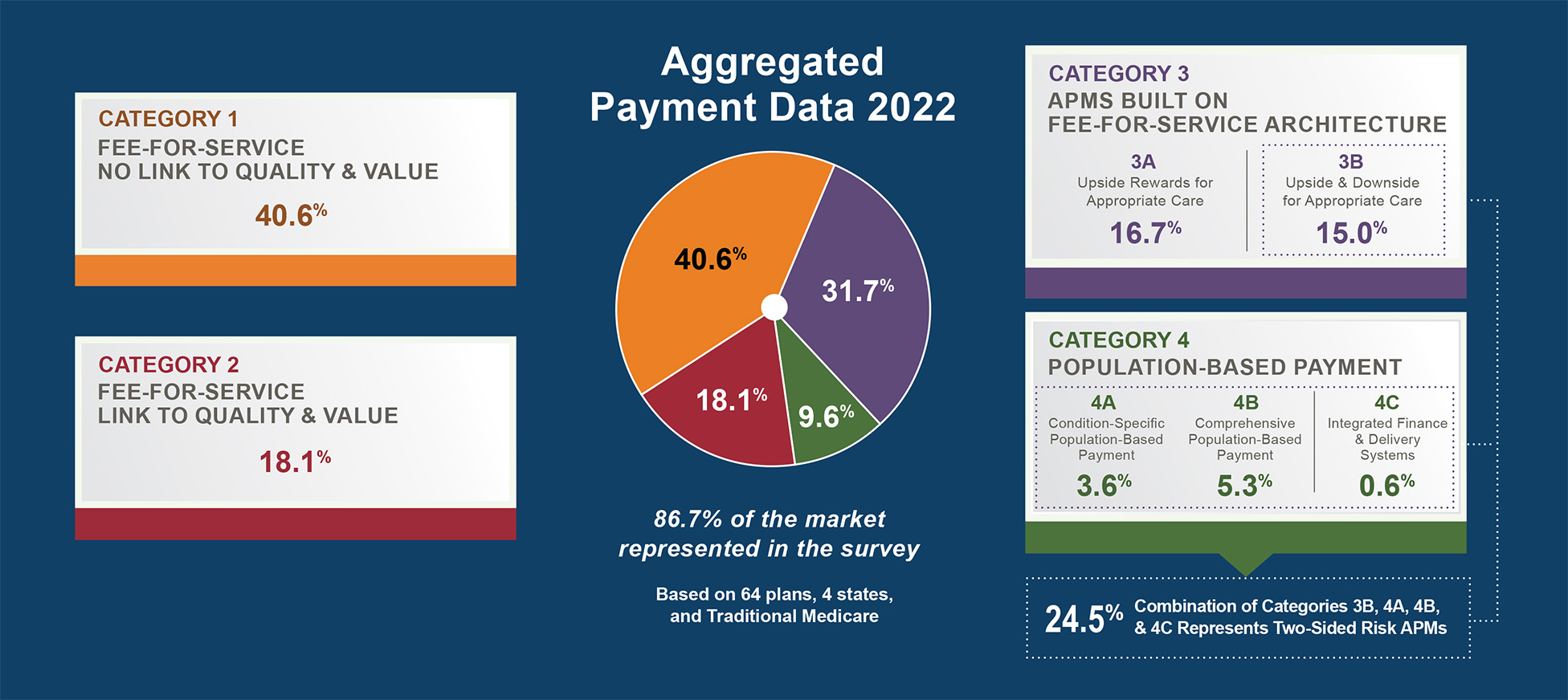
So, here’s a suggestion for employers—get engaged in the dialogue and use your voice to influence how the massive checks your company writes to carriers will hold providers accountable. The Health Care Payment and Learning Action Network (LAN) was initiated by the Department of Health and Human Services to align stakeholders across sectors in moving payment from traditional fee-for-service (FFS) methods to FFS linked to quality and alternative payment models (APMs). “Private payers” does not just mean insurers, it also means employers.

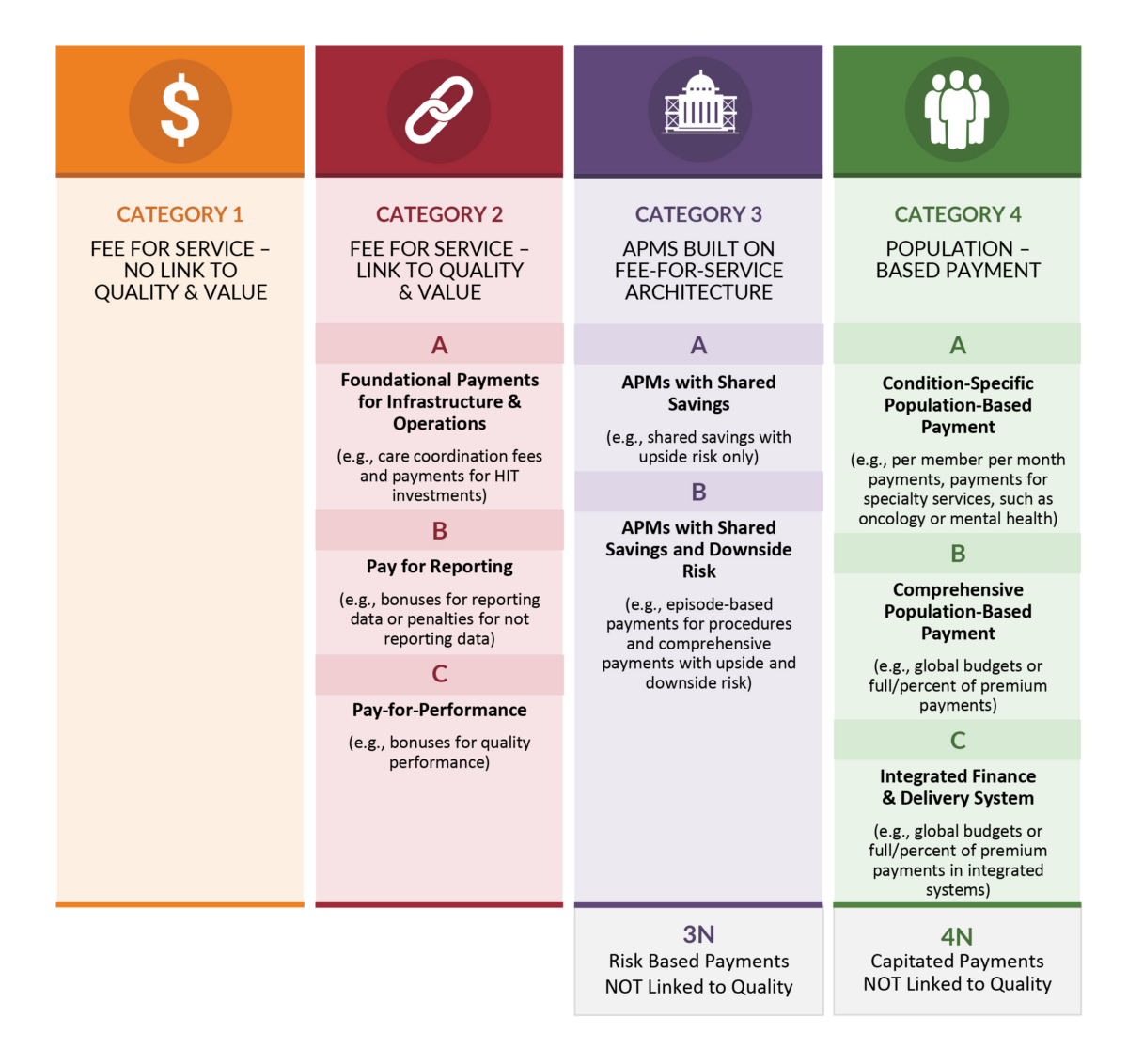
I urge employers to become familiar with the payment categories and to review the many APM examples outlined by the LAN’s APM Framework and Progress Tracking Work Group in its APM Framework White Paper. Other LAN work groups are now developing recommendations for models that many purchasers are directly involved in, including population-based payments, joint replacements, and other APMs. I urge you to join this affiliated community, know what recommendations are being developed, and ensure your voice is heard in the process. More importantly, I urge you to consider what you can do to move your organization to smarter, value-based purchasing of health care. Don’t just sit back and wait for what comes out in the end, because as noted motivational speaker Tony Robbins has said…, “If you do what you’ve always done, you’ll get what you’ve always gotten.”

Please note that guest blogs from Guiding Committee and Work Group members represent the views of the individual authors and do not represent official positions of the Guiding Committee, Work Groups, CAMH, or CMS.

CMS Acting Principal Deputy Administrator, Chief Medical Officer, and Director of the CMS Innovation Center, Dr. Patrick Conway, reflects on the progress towards transforming our healthcare system into one that is better, smarter, and results in healthier people.

“…We have seen some positive results from models that the Innovation Center is testing. Savings in the Pioneer ACO Model were so significant – and coupled with positive results on improved quality of care and better patient experience – that the independent CMS Office of the Actuary certified that expansion of the model as it was tested in the first two years would reduce net program spending under Medicare. We have also incorporated elements of the Pioneer ACO Model into the Medicare Shared Savings Program, which reaches more beneficiaries in more areas of the country. We are actively evaluating other models to see if they meet this bar and have applied lessons and feedback from the Innovation Center models throughout the Medicare program…”

Read the full blog for more information.

[kleo_button title=”Read Blog” href=”https://blog.cms.gov/continuing-the-shift-from-volume-to-results-in-american-healthcare/” style=”default” size=”” ]

Last month, the Health Care Payment Learning & Action Network (LAN) launched the Clinical Episode Payment (CEP) Work Group with the following charge: to advance effective clinical episode-based payment models that drive and support better health outcomes for patients at a lower cost. As chair of this group, which brings together experts representing payers, providers, purchasers, states, and consumer advocates, I’m excited to identify opportunities and strategies to align on core clinical episode payment elements across the private and public sectors.

Improving Patient Health Outcomes

At our kick-off meeting, the CEP Work Group came to a consensus decision to explore episode payments in three priority areas: joint replacement, maternity care, and cardiac care. For each condition or procedure, we will consider the following elements to improve patient health outcomes:

  • Start point and length of each episode;
  • Relative levels of accountability and risk involved;
  • Strategies for establishing target price and benchmarks;
  • Appropriate quality metrics (including both clinical quality and patient-reported measures); and
  • Data systems that would be needed to eventually bring episode payment to scale across multiple payer and provider types.

In joint replacement, the CEP Work Group agreed to focus on a set of episode payment recommendations for three procedures: total knee replacement for patients with osteoarthritis; total hip replacement for patients with osteoarthritis; and total hip replacement for patients with fractures.

Why Joint Replacement?

Many people are focused on joint replacement right now and for good reason. Even though surgeons perform more than 400,000 hip and knee replacements in the U.S. each year, the quality and cost of care for these surgeries varies widely among providers and across geographic areas. We can and need to do more to better serve patients and keep costs down.

Other Models to Consider

Many organizations, both public and private, are exploring ways of using bundled payments to improve outcomes and contain costs associated with knee and hip replacements. The private sector has developed a number of approaches, CMMI’s Bundled Payments for Care Improvement (BPCI) is testing a range of models, and recently CMS finalized the Comprehensive Care for Joint Replacement (CJR) rule that will test a bundled payment model for joint replacement in 67 geographic areas across the country. The CJR initiative will give hospitals a financial incentive to work with physicians, home health agencies, skilled nursing facilities, and other providers to make sure patients receive the coordinated care they need to improve outcomes.

But CJR is only one model and CMS is just one of many organizations exploring alternative payment models for joint replacement. Because the current understanding of how best to treat osteoarthritis is changing and because this condition is common across the U.S. population, the CEP Work Group is interested in studying the various ways it affects total hip or total knee replacement procedures. For example, programs in New Jersey and Arkansas are taking a different approach to bundling, one that places the risk—and the potential for reward—on the surgeon, rather than the hospital. And some private payers are exploring other innovative ways of bundling joint replacement payment; for example, by stratifying the payment based on the presence or absence of other health conditions that could affect the amount of care a person might need during recovery. These so-called “condition-based” approaches to bundling payments offer the potential to improve the quality of care patients receive, but we must understand them fully before they can be widely adopted.

Working Together to Move the Field Forward

The CEP Work Group is charged with moving quickly, which is why we’ve launched an effort to gather best practices from a diverse range of joint replacement alternative payment models. Because there is great interest in bundles for joint replacement and a wide variety of options, examining joint replacement offers an excellent opportunity to assess the range of current understanding and best practices from the field. Once a framework for assessing joint replacement bundles is established, the work group will address maternity care and cardiac care. For each episode on which the work group focuses, there will be an episode-specific work product summarizing best practices and recommendations that will be available for public review and comment.

Creating a payment system that is more rational and efficient must be a collaborative process in order to be successful. There is no one-size-fits-all approach to transforming the way the nation pays for health care. That is why it is important that we work quickly to explore multiple models and approaches, review lessons from previous and current programs, and promote innovative approaches that are flexible enough to meet the needs of different patients, delivery and payment systems, and communities.

Please note that guest blogs from Guiding Committee and Work Group members represent the views of the individual authors and do not represent official positions of the Guiding Committee, Work Groups, CAMH, or CMS.

The Bundled Payment for Care Improvement (BPCI) demonstration models were introduced as one of the nearly 3 dozen innovation models to be tested and evaluated by the Centers for Medicare and Medicaid Innovation (CMMI). The general concept is to “bundle” the payment for all of the patient care services by various providers over an episode of illness. This concept should seem somewhat familiar to you. It might be easier to think about if you conceive of a bundle as just a bigger version of the Diagnosis-Related Group (DRG) we already know. Currently, hospitals receive a single, prospectively determined, dollar amount for all the services they provide during an inpatient stay, based primarily on diagnosis that brought the patient to the hospital. The new bundled payments will work in a similar manner. Medicare appears to be moving toward a single predetermined bundled payment amount that includes all the services provided during the 3 days prior to hospitalization, all the services provided at the hospital, and all the services provided for up to 90 days post-discharge from the hospital. It’s like a “super” DRG – a single all-inclusive payment for the full episode of illness, rather than just the geometric mean length of stay associated with an inpatient stay.

Until last month, there were only four basic Bundled Payment Models approved for testing, they included:

  • Model 1: Acute Hospital + Physician Services (Retrospective Payment)
  • Model 2: Acute Hospital + Physician Services + Post-Acute Providers + Outpatient Services
  • Model 3: Post-Acute Providers + Physician Services + Outpatient Servicesth
  • Model 4: Acute Hospital + Physician Services (Prospective Payment)

In July 2015, CMS introduced an additional Bundle Payment Model. CMS issued a Proposed Rule for public comment with a description of a new “mandatory” bundled payment model developed specifically for lower extremity joint replacement cases (MS-DRGs 469 & 470) called the Comprehensive Care for Joint Replacement. You are sure to learn more about this in the very near future, so I will not address it in this post.

I believe there are many potential benefits associated with the experimentation of bundle payment models; chief among these is the enhanced coordination of multiple providers across the continuum of care, each of whom will now be more concerned about what happens to a patient once the patient leaves their particular setting – less emphasis on the “silos of care”. If implemented as planned, we should hope to see a true transformation in the way healthcare providers work together to deliver care to their patients. We should see a greater degree of the communication among providers, seamless handoffs of treatment plans and mutually established clinical and functional goals that would go with the patient from setting to setting, shared root cause analyses to discover and correct the underlying factors that lead to excessive readmission rates, and greater sharing of quality and outcome metrics among the various providers. In my opinion… all of this is really good stuff!

Now that we have had time to gain some actual experience with bundles, we might want to ask ourselves whether they are advancing the larger, longer-range goal of moving from volume to value. Bundles represent an initial learning opportunity on a much longer path. Providers for the first time will focus on the longer time horizon covering the full episode of the illness. In addition to the benefits mentioned above, they might also learn about sharing financial risks and rewards. Providers should openly accept the opportunities and challenges presented while experimenting with bundle payments – learning what works, as well as what does not work so well. However, bundle payments may not be an end in and of themselves. I view them as a transitional step, a way to get providers, payers and patients ready for the more expansive alternative payment models that will surely follow.

Let me explain my thinking on this…

By definition, BPCI requires a short-term acute care hospital inpatient stay to initiate each bundled payment. Given this, hospitals may very well choose to maintain their current approach to revenue generation, believing that more bundles are better – incentivizing some hospital CEOs and CFOs to stay focused on increasing inpatient volumes and capturing more market share from their competitors. Lofty ideas about managing population health, increasing the focus on prevention and wellness, developing systems and processes to maintain the health of patients with multiple co-morbid chronic conditions to avoid exacerbations that might require hospitalization, etc. are not relevant in the BPCI world. The unintended effect of implementing BPCI in the short-term is that some acute care hospitals may pursue higher inpatient hospital utilization, not less!

Therefore, I would encourage everyone to utilize the BPCI demonstration projects to test the water in longitudinal care, but recognize it is a short-term bundle. Let us learn everything we can about designing an optimal plan of care for our patients that covers the full course of care over of a longer 90+-day episode of illness. Apply everything we can learn about better communication and coordination among all the various levels of care; greater involvement of patients and families in the care decisions; develop meaningful indicators of quality, both from the standpoint of clinical outcomes as well as measures based on patient reported outcomes; and learn as much as we can about managing financial risks. There should be no question that the move from traditional Fee-for-Service reimbursement to Bundled Payment for an episode of illness represents both a significant and dramatic change. However, once we feel comfortable having adapted to some of these more fundamental building blocks essential to virtually all alternative payment models, we should keep our eyes focused on the future… a future where the financial incentives in healthcare truly foster delivering greater value and not, even unintentionally, greater volume.

Please note that guest blogs from Guiding Committee and Work Group members represent the views of the individual authors and do not represent official positions of the Guiding Committee, Work Groups, CAMH, or CMS.