
August 2026

Choice and Competition Workgroup Member
HCPLAN members play a vital role in advancing healthier communities and stronger health care connections. In August 2026, Dr. Toyin Ajayi, a member of the Choice and Competition Workgroup, shared insights into how Cityblock Health is advancing value-based care through a whole-person approach, AI-enabled tools that support better health outcomes, and by redefining what “choice” can mean in today’s health care system.
How is Cityblock Health advancing value-based care?

“Healthcare today isn’t working for anyone in the system — not for patients, not for the doctors trying to care for them, not for the payers footing the bill. Everyone is straining against a model that was never built for the people who need it most.
At Cityblock, we set out to build something different, care designed from the ground up for people with complex medical, behavioral, and social needs, delivered wherever they are instead of wherever the system finds it convenient. Value-based, outcomes-aligned payment models are the bedrock of this work. Unlike traditional fee-for-service, value-based care gives us the crucial financial flexibility and incentive structure to invest in whole-person care. In plain language, that means improving access to behavioral health by providing in-home services and ensuring access to healthy food. If we can prove that this comprehensive model drives better outcomes for the populations everyone else has written off as too hard or too expensive to serve well, we’ve proven it can work for anyone.”
What measurable outcomes have resulted from this approach?
“Fewer avoidable hospitalizations, lower total cost of care, members who trust us enough to stay engaged year after year, not just show up for one visit. Those are the numbers that matter, because they’re the only ones our members actually feel in their daily lives.
Anyone can claim impact. What we’re building is the evidence base that proves value-based care isn’t just a payment model but a better way to keep people healthy. Across the industry, roughly 60 percent of health care AI spend goes toward back-office billing and coding, while less than 20 percent of plans use technology to directly enhance care plans or member engagement. We’ve built our model the other way around. Every digital tool we’ve deployed is measured by whether it changed a health outcome or a member’s experience, not whether it processes a claim faster.”
How does this work align with the HCPLAN’s Choice and Competition priorities?
“Real choice and competition in this market shouldn’t mean overwhelming populations with complex needs with options on paper that fail them in practice. Meaningful choice means expanding access to genuinely high-value care, giving members options tailored to their real lives, whether that’s providing care in their homes, integrating behavioral health and primary care, or investing upstream in health and wellness.
Just as importantly, expanding choice requires driving greater market competition not just by introducing more providers, but by bringing more providers, community partners, and payers into value-based models. The most effective way to encourage stakeholder participation in value-based care is through evidence that it works. We’ve built that proof with populations historically considered too complex to serve under traditional payment models, showing that when value-based care drives better outcomes, the entire market expands and thrives.”
In one sentence, what is your organization’s “why” for value-based care?
“Too often, healthcare innovations are designed for the simplest, healthiest patients first, while the people with the most complex needs are left navigating a traditionally fragmented system. We do value-based care because our members need a system designed around their realities right now.
For individuals managing multiple chronic conditions, behavioral health needs, and social challenges, traditional fee-for-service simply does not work. Value-based care is our ‘why’ because it creates the exact alignment we need. It holds us fully accountable for health outcomes, gives us the flexibility to provide care where and when it’s needed, and proves that high-value care can be delivered sustainably to any population.”
What aspect of your current work with the HCPLAN are you most excited about, and why?
“What excites me most is the HCPLAN’s momentum in moving value-based care from a series of pilots into the standard of care nationwide. Through our work on the Choice and Competition Workgroup, we are redefining what ‘choice’ means for populations with complex needs. We are ensuring it isn’t just about having the opportunity to select a health plan or provider, but having real access to proactive, high-value models of care. Seeing real alignment across CMS, state leaders, and health plans around these priorities gives me confidence that we are building a delivery system that works for the people who need it most.”
Learn more about the HCPLAN’s Choice and Competition work.










 Purchasers
 Providers |
  Policy Makers |
  Enabling Organizations |
  Community-Based Organizations

















 Emily DuHamel Brower, M.B.A., is senior vice president of clinical integration and physician services for Trinity Health. Emphasizing clinical integration and payment model transformation, Ms. Brower provides strategic direction related to the evolving accountable healthcare environment with strong results. Her team is currently accountable for $10.4B of medical expense for 1.6M lives in Medicare Accountable Care Organizations (ACOs), Medicare Advantage, and Medicaid and Commercial Alternative Payment Models.
 Victor is the Chief Medical Officer for TennCare, Tennessee’s Medicaid Agency. At TennCare, Victor leads the medical office to ensure quality and effective delivery of medical, pharmacy, and dental services to its members. He also leads TennCare’s opioid epidemic strategy, social determinants of health, and practice transformation initiatives across the agency. Prior to joining TennCare, Victor worked at Evolent Health supporting value-based population health care delivery. In 2013, Victor served as a White House Fellow to the Secretary of Health and Human Services. Victor completed his Internal Medicine Residency at Emory University still practices clinically as an internist in the Veteran’s Affairs Health System.
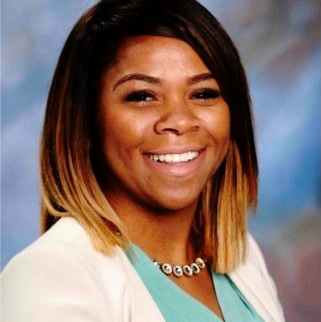 Tamara Ward is the SVP of Insurance Business Operations at Oscar Health, where she leads the National Network Contracting Strategy and Market Expansion & Readiness. Prior to Oscar she served as VP of Managed Care & Network Operations at TriHealth in Southwest Ohio. With over 15 years of progressive health care experience, she has been instrumental driving collaborative payer provider strategies, improving insurance operations, and building high value networks through her various roles with UHC and other large provider health systems. Her breadth and depth of experience and interest-based approach has allowed her to have success solving some of the most complex issues our industry faces today. Tam is passionate about driving change for marginalized communities, developing Oscar’s Culturally Competent Care Program- reducing healthcare disparities and improving access for the underserved population. Tamara holds a B.A. from the University of Cincinnati’s and M.B.A from Miami University.
 Dr. Peter Walsh joined the Colorado Department of Health Care Policy and Financing as the Chief Medical Officer on December 1, 2020. Prior to joining HCPF, Dr. Walsh served as a Hospital Field Representative/Surveyor at the Joint Commission, headquartered in Oakbrook Terrace, Illinois.